
Signal Aspect Flashing Relay (SAFR)
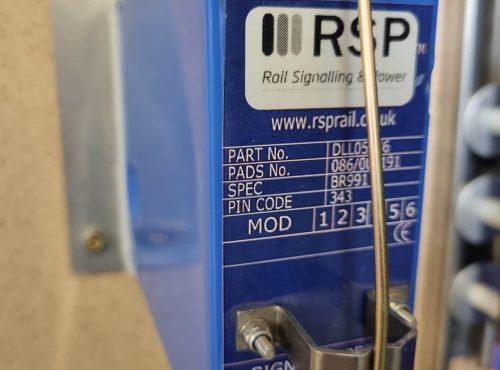
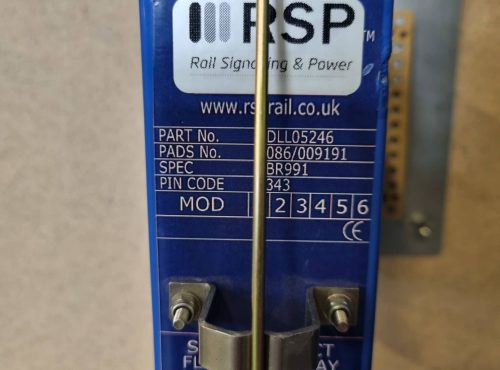
The RSP’s Signal Aspect Flashing Relay (SAFR) is the only Network Rail approved product suitable for replacing a Flashing Aspect Control Unit (FACU). A type approved unit based on BR930 relay ‘plug -in’ technology suitable for use with both incandescent and LED signals, as outlined under Acceptance of Signalling Equipment NR/SP/SIG/1007 Issue 2.

Not every signalling upgrade needs to become a major signalling project.
When an ageing Flashing Aspect Control Unit (FACU) reaches the end of its life, the assumption is often that a larger signalling upgrade is the only option.
In many cases, it doesn’t have to be.
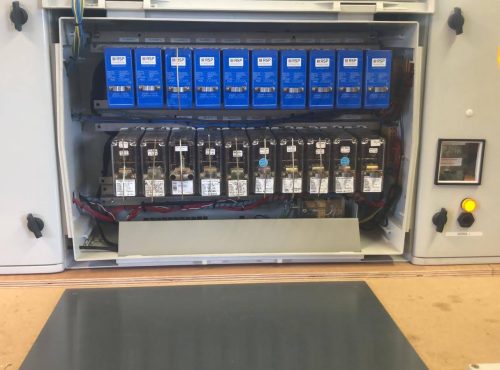
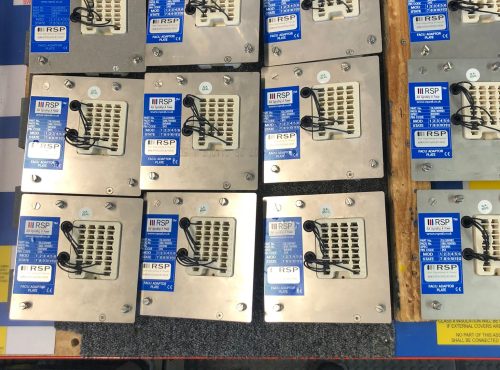
RSP’s Signal Aspect Flashing Relay (SAFR) is the only Network Rail accepted product designed to replace the old FACU, and for even more convenience, it can be combined with RSP’s SAFR adaptor plate.
The installation process requires no wiring alterations:
1️⃣ Disconnect the existing FACU
2️⃣ Connect the existing wiring to the adaptor plate
3️⃣ Install the new SAFR unit
That’s it, a direct swap that fits standard BR930 relay slots, with an adaptor available where required.
Quick, easy and effective. Allowing you to modernise a critical component without the cost, disruption and timescales associated with upgrading an entire signalling system.
✔ Lower project costs
✔ Faster installation
✔ Minimal disruption to existing infrastructure
✔ Compatible with both incandescent and LED signals
✔ Designed to fit standard BR930 relay slots using an adaptor where required
Key Features:
- Lower project costs
- Faster installation
- Minimal disruption to existing infrastructure
- Compliant to NR/SP/SIG/100
- Compatible with both incandescent and LED Signals
- Quick and easy installation with base and unit designed and built to fit into standard BR930 relay slot
- Adaptor plate available to allow quick and easy replacement of an old FACU module
- Supplied fully certified and factory-tested for improved reliability.
- Railway Cat No. 086/009191
- RSP Part No. DLL05246
What is a Signal Aspect Flashing Relay (SAFR)
A Signal Aspect Flashing Relay (SAFR) is a relay used in railway signalling systems to control the flashing of signal aspects, typically yellow lights, to provide advance warning to drivers.
In traditional relay interlockings, the SAFR would be a dedicated timing relay within the relay room. In modern computer-based interlockings, the flashing function is often implemented in software, although the term SAFR is still commonly used by signalling engineers to describe the flashing aspect function.
What does it do?
The SAFR repeatedly switches a signal lamp on and off at a predetermined rate, creating a flashing effect. This is commonly used where:
- A train is being routed onto a diverging route at speed.
- Drivers need additional advance warning that the route ahead differs from the normal straight-through route.
- Junction signalling requires flashing yellow sequences to indicate the train can proceed over a diverging route without stopping.
How does a SAFR work?
The relay:
- Receives an input from the signalling control circuits.
- Energises and de-energises at a set frequency (typically around once per second, depending on the signalling design).
- Causes the associated signal aspect to flash on and off.
- Is interlocked with other signalling relays to ensure flashing aspects are only displayed when it is safe to do so.
Contact RSP today, or request a quote for your SAFR project.
Contact Us
"*" indicates required fields